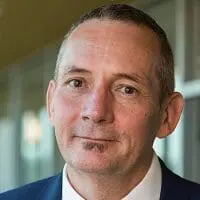
Professor Anthony L Cunningham AO FAHMS
The Westmead Institute for Medical Research
Professor Tony Cunningham AO is Executive Director, The Westmead Institute for Medical Research and Director of the Institute’s Centre for Virus Research, Professor of Research Medicine Sydney Medical School, Westmead, the University of Sydney. He is also Director of the Australian Centre for HIV and Hepatitis Virology Research (ACH2), funded directly by the Australian Government. He is a clinician scientist who trained in infectious diseases, clinical virology and virology research at the University of Melbourne and as a postdoctoral fellow in infectious diseases at Stanford University. His major research interests are in HIV and Herpesviruses biology and immunology, especially in relation to the development of vaccines and microbicides. He has published more than 400 papers on these topics, with ~21,000 citations.
He has played a leading role in elucidating HIV interactions with macrophages, as reservoirs, and with dendritic cells as an initial target cell in the anogenital mucosa, over 30 years; recently focusing on viral immune-evasive mechanisms. His group has also made numerous key contributions to human HSV immunology and T-cell adjuvants, which has led to the development and trialing of novel HSV and Herpes Zoster vaccines by GlaxoSmithKline. The latter is now bussed in North America. In 2010, Tony was made an Officer in the Order of Australia (AO) for “service to medicine, particularly in the field of viral research and through the development and leadership of medical and biomedical research” and, in 2015, he was elected a fellow of the Australian Academy of Health and Medical Sciences (FAHMS). He is an Immediate Past President of The Association of Australian Medical Research Institutes (2017-18).
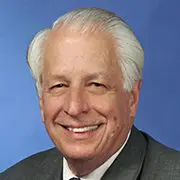
 Professor Emeritus Michael Francis Good AO FAHMS
Griffith University
Professor Emeritus Michael Good is a Principal Research Leader at the Institute for Biomedicine and Glycomics, Griffith University, Australia. His group has developed candidate vaccines for the prevention of malaria and streptococcus and these have entered clinical trials. He has published over 400 refereed scientific papers and book chapters.
He graduated MD PhD DSc from the University of Queensland and the Walter and Eliza Hall Institute of Medical Research/University of Melbourne and undertook postdoctoral training at the National Institutes of Health in the USA.
He was the Director of the Cooperative Research Centre for Vaccine Technology and a former Director of the Queensland Institute of Medical Research. He served as President of the Association of Australian Medical Research Institutes. From 2006-2012 he was Chairman of the National Health and Medical Research Council of Australia.
In 2008 he was made an Officer of the Order of Australia (AO), in 2009 he won the Australian Museum CSIRO Eureka Prize for Leadership in Science and received an honorary doctorate (DUniv) from Griffith University. In 2010 was named a Queensland Great and was awarded an NHMRC Australia Fellowship. In 2011 he was named the Heart Foundation’s Researcher of the Year. In 2023 he won Dr John Raftos Award from the National Foundation for Medical Research and Innovation.
Michael Good is a Fellow of the Australian Academy of Technological Sciences and Engineering, a Fellow of the Australian Academy of Health and Medical Sciences and a Fellow of the Queensland Academy of Arts and Sciences. He is an International Honorary Fellow of the American Society for Tropical Medicine and Hygiene and a Fellow of the American Academy of Microbiology.

Professor Helen Marshall AM FAHMS
The University of Adelaide
Professor Helen Marshall AM is a clinician researcher and NHMRC Practitioner Fellow with specialist training in child health, public health and vaccinology. She is a Consultant and Professor in Vaccinology at the Adelaide Medical School and the inaugural Clinical Research Director, Women’s and Children’s Health Network. She is a Child and Adolescent Health theme leader and Deputy Director of the Robinson Research Institute at The University of Adelaide, South Australia. She is the Medical Director of the Vaccinology and Immunology Research Trials Unit, VIRTU, at the Women’s and Children’s Hospital, and Research Leader, Vaccines and Infectious Diseases Group in the Robinson Research Institute. She has previously been a member of the ATAGI, which advises the Federal Minister of Health on immunisation for the National Immunisation Program and currently undergoes vaccine evaluations for the ATAGI.
Professor Marshall has published over 230 peer-reviewed papers in international journals and received > $35 million in grant funding. She was awarded the NHMRC “10 of the Best” research projects in 2016, the SA Science Award for Excellence in Research for the Public Good in 2011, the SA Science Award for Excellence in Research Collaboration in 2019 and a Member of the Order of Australia in 2022. She is a Fellow of the Academy of Health and Medical Sciences, the 2022 SA Australian of the Year, SA Woman of the Year, and Office of the Commissioner for Public Sector Employment Leader of the Year.
 Professor Sue Walker AO FAHMS
The University of Melbourne
Professor Sue Walker is the Sheila Handbury Chair of Maternal Fetal Medicine and Head of Department of Obstetrics, Gynaecology and Newborn Health at The University of Melbourne. Sue is also Co-Director of Mercy Perinatal – a three-pillar centre of excellence committed to clinical care, education and research in high-risk pregnancy. Her own research interests focus on improving the detection and management of fetal growth disorders, treatments for pre-eclampsia, and prevention of stillbirth.

Professor Asha Bowen OAM FAHMS
Perth Children’s Hospital and The Kids Research Institute Australia
Professor Asha Bowen is a clinician-researcher and is working across the Perth Children’s Hospital as a paediatric infectious disease specialist and heads the Healthy Skin and ARF Prevention team at The Kids Research Institute Australia (formerly Telethon Kids Institute). Prof Bowen holds affiliation with several Universities including the Division of Paediatrics, School of Medicine at the University of Western Australia, Honorary Fellow at Menzies School of Health Research, Charles Darwin University, Adjunct Research Fellow at the Institute for Health Research, The University of Notre Dame Australia and Honorary Senior Lecturer at the University of Cape Town. This uniquely positions her for rapid translation of research results from bush to bench to bedside and beyond, with impact globally. Since 2010, Prof Bowen has held continuous people support NHMRC Fellowships including PhD (2010-14) [awarded by Charles Darwin University in 2015], Early Career Fellowship (2015-20), Emerging Leader Investigator (EL2) (2020-24) and Leadership 1 Investigator Award (L1) (2025-29). Since PhD completion, she has achieved >$100M in grant funding for over 90 research projects and published >230 peer-reviewed manuscripts as lead or senior author on >50% of these publications.
Prof Bowen has generated breakthrough new knowledge and health impacts in skin infection control for Aboriginal Australians. CI Bowen’s research focusses on reducing the burden of infectious diseases that lead to RHD, with studies spanning from bush (remote clinical trials: SToP Trial 2017-24, Missing Piece 2018-24), to bench (lab experiments on skin and throat pathogens, AMR experiments), to bedside (S. aureus bacteraemia trials to improve outcomes) and beyond (National Healthy Skin Guidelines, 2nd edition 2023).
In 2023 she became the first ever female President of the World Society for Pediatric Infectious Diseases and was recognised for her outstanding research by Cosmos Magazines – 50 Women on the cutting-edge of science list. In 2024, she received the Order of Australia Medal (OAM) for services to infectious diseases.

Professor Gabrielle Belz FAHMS
The University of Queensland
Professor Gabrielle Belz trained in veterinary medicine and surgery from the University of Queensland in 1993 and has made major contributions to the field of immunology for which she received a DVSc. Her prime research interests are in the areas of infectious disease, particularly lung and gut diseases, where she works to unravel how protective innate and adaptive immune cells are wired to generate long-live protective memory. She has published over 200 peer-reviewed original papers in leading scientific journals, an H-index of 75, and has been cited > 21,000 times. She is currently the Chair of Immunology, University of Queensland Diamantina Institute.

Distinguished Professor Elizabeth Elliott AM FAHMS
Children’s Hospital Westmead Clinical School, University of Sydney
Elizabeth Elliott is a Distinguished Professor in Paediatrics and Child Health at the University of Sydney; an NHMRC Practitioner Fellow; and Co-Director of the NHMRC Centre of Research Excellence in FASD. She’s a Consultant Paediatrician at the Children’s Hospital at Westmead, where she leads the NSW Fetal Alcohol Spectrum Disorder (FASD) assessment service and is Co-Director of the centre for Care and Intervention for Children and Adolescents affected by Drugs and Alcohol (CICADA).
Professor Elliott has a Doctorate in Medicine (Oral Rehydration therapy) and an MPhil in Public Health (Haemolytic Uraemic Syndrome). She’s a Fellow of the Royal Australasian College of Physicians, Royal College of Paediatrics and Child Health (UK), and Royal College of Physicians, London.
Leadership roles have included Head of the International Network of Paediatric Surveillance Units; Founder/Director of the Australian Paediatric Surveillance Unit for study of rare childhood diseases; co-founder of the Paediatric Active Enhanced Disease Surveillance system; and Chair of the 2013 International Pediatric Association conference.
She consulted to the Australian Human Rights Commission in the Inquiry into Children in Immigration Detention; to WHO regarding alcohol policy for pregnancy; and to National Institute of Alcoholism and Alcohol Abuse regarding FASD. Board Memberships include Royal Far West, the National Organisation for FASD, and the Hoc Mai Foundation. She sits on the Australian Government’s National FASD Advisory Committee and Life Saving Drugs Program Expert Committee.
Recognition includes Membership of the Order Australia, Fellowship of the Royal Society of NSW (RSN), the James Cook Medal (RSN), AMA Excellence in Healthcare Award, Howard Williams Medal (RACP), and Asian Pacific Paediatric Association Outstanding Paediatrician Award. She will focus on promoting diversity within the AHMS Fellowship and ensuring that the AAHMS is relevant, proactive and recognized as the pre-eminent voice for health and medical science in Australia.

Professor Russell Gruen FAHMS
The Australian National University
Professor Russell Gruen is Dean of the ANU College of Health and Medicine and a surgeon at The Canberra Hospital. Previously he was Professor of Surgery and Public Health at Monash University and Director of the National Trauma Research Institute, after which he led health technologies and international partnerships at Nanyang Technological University Singapore.
He has made substantial contributions to care for the severely injured, and strengthened research infrastructure with a national trauma registry, a prehospital clinical trials network, and novel evidence-based medicine capabilities. He is recognised for influential work on professional ethics, and interdisciplinary research with strong emphasis patient benefit.
 Distinguished Professor Dianne Nicol FAHMS
The University of Tasmania
In 2021, Professor Dianne Nicol stood down from her positions as Distinguished Professor of Law and Director of the Centre for Law and Genetics (CLG) at the University of Tasmania in Australia, but continues as Distinguished Professor Emerita. Dianne has a background in science as well as law, with a PhD in cell biology. She was elected as a fellow of the Australian Academy of Law in 2016 and the Australian Academy of Health and Medical Sciences in 2020.
The broad theme of the CLG’s research is the regulation and governance of biomedicine, human genetics and genomics, and stem cell technology. The CLG team was established more than 25 years ago and has broad range of international collaborators. Professor Nicol’s current research focuses primarily on the regulation and governance of personalized medicine, genomic data sharing, biobanking, genome editing and other emerging health technologies, together with commercialisation of biotechnology and patenting of biotechnological inventions.
Professor Nicol is Chair of the National Health and Medical Research Council Embryo Research Licensing Committee and co-lead of the Regulatory and Ethics Workstream of the Global Alliance for Genomics and Health.
 Professor Helena Teede AM FAHMS
Monash University
Professor Teede is a clinician, academic, and leader committed to research and translation, delivering measurable changes in policy and practice. She is nationally and internationally recognised for excellence in health and medical research, exceptional leadership, and community engagement. Focusing on improving women’s reproductive health, she has spearheaded the development of the first evidence-based guidelines on PCOS in the world, pioneered interventions for preventing obesity in women, and established one of only four national Diabetes Centres of Excellence. Having raised a family and maintained an active academic and clinical career, she is a role model for women in her profession.
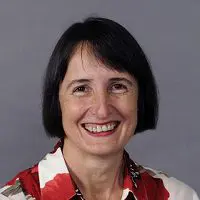
Professor Maree Teesson AC FAHMS FASSA
The Matilda Centre
Distinguished Professor Maree Teesson AC is Director of the Matilda Centre and an NHMRC Leadership Fellow at the University of Sydney. Professor Teesson is Chair of Australia’s Mental Health Think Tank. Professor Teesson is a Former National Mental Health Commissioner (2018-2021), an Australian Academy of Health and Medical Sciences Fellow, a Fellow of the Australian Academy of Social Sciences, and a Fellow of the Royal Society of New South Wales. Professor Teesson was announced as a Companion of the Order of Australia in the Australia Day 2018 Honours List, awarded a Westpac/Australian Financial Review 100 Women of Influence (Innovation), and awarded an Australian Museum Eureka Prize for Outstanding Mentor of Young Researchers. Professor Teesson has made a major contribution to Australia’s health and medical research effort in the field of mental health and substance use. In particular, she is known nationally and internationally for her research on the comorbidity between mental health and substance use disorders.


 Professor Susan Davis AO FAHMS
 Professor Bronwyn Kingwell FAHMS
 Professor Don Nutbeam FAHMS